After the Roof Leak: Your Attic, Your Ducts, and the Air You Breathe
The 20-minute check every leak repair deserves
Most Pompano Beach homeowners treat a roof leak as finished the day the shingles are fixed and the ceiling stain is painted over. The roof is sound, the drip is gone, case closed. But water that got into your home usually left something behind — and the place it lingers longest is the one system almost nobody thinks to check: the attic and the ductwork running through it.
Why the attic is the problem
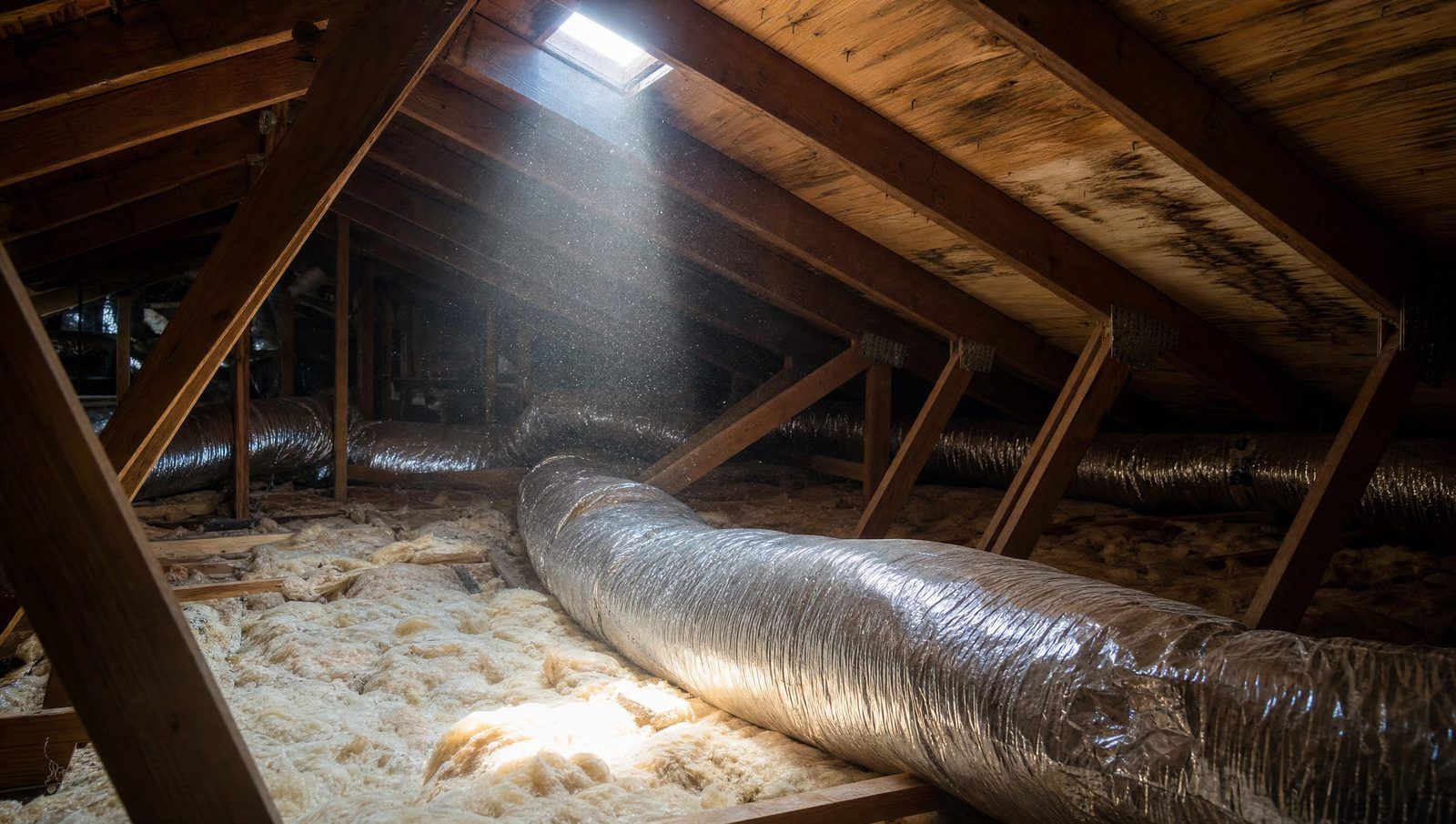
In South Florida construction, your air conditioning ducts typically run through the attic — the same space a roof leak drains into. When water gets past the roof deck, it soaks insulation, wets the outside of duct runs, and pushes attic humidity way past its normal range.
In our climate, damp plus dark plus warm is a recipe, and what it cooks is mold and mildew — sometimes on the duct exterior, sometimes inside duct runs where condensation and dust have built up a perfect growth medium.
The symptoms that get blamed on something else
They show up slowly: a musty smell when the AC first kicks on, allergy flare-ups indoors, dust that comes back a day after cleaning, rooms that smell different from the rest of the house.
By the time anyone connects it to the roof leak from six months ago, the leak itself is ancient history.
The four-step check after any leak repair
1. Get eyes on the attic. Insulation that stayed wet needs replacing, not just drying.
2. Inspect the duct runs near the leak for staining or corrosion on the outside.
3. Follow your nose. If there’s any musty odor from the vents, have the ducts professionally inspected and cleaned. Companies that do air duct cleaning in Fort Lauderdale and the surrounding Broward area see post-leak contamination constantly and can tell you quickly whether you’re dealing with surface dust or actual microbial growth.
4. Run a humidity check. Attics that stay above roughly 60% relative humidity after a leak repair often have a ventilation problem the leak just exposed.
Why it’s worth twenty minutes
None of this is meant to alarm — most leaks caught early do no lasting harm. But the roof, the attic, and the air system are stacked on top of each other for a reason, and water doesn’t respect the boundary between trades.
Fix the roof, then spend twenty minutes confirming the leak didn’t leave a tenant behind. Your nose — and whoever in your house has allergies — will tell you if you skipped this step.